What Are Custom Hooks?
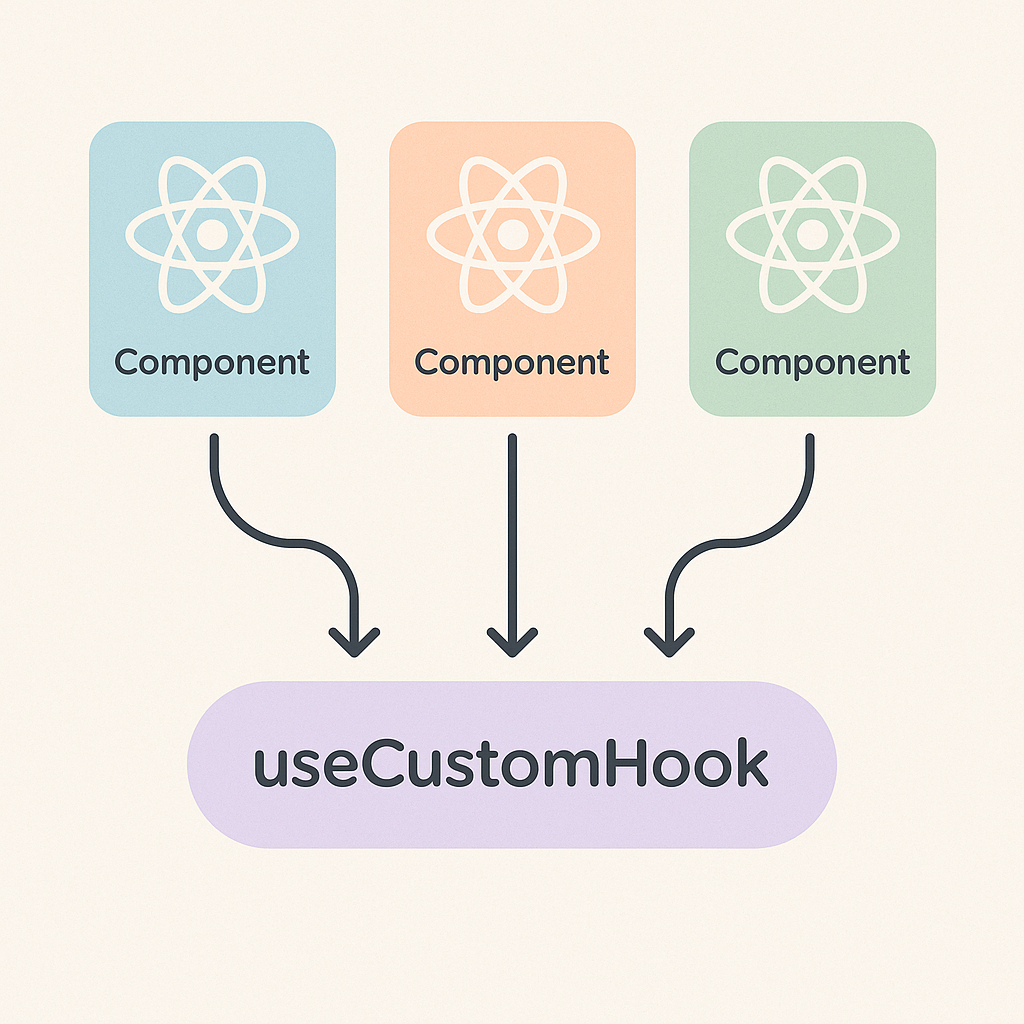
Custom Hooks are JavaScript functions that start with “use” and encapsulate stateful logic you’d otherwise repeat in several components.
Why Use Them?
Reusability: Write your logic once and share it everywhere.
Readability: Keeps components focused on rendering, not on complex data fetching or event handling.
Testability: You can test hook logic in isolation, without mounting UI.
Naming & Structure
Always prefix with use (e.g., useFetch, useForm).
Return only what consumers need: state values, updater functions, or any side-effect triggers.
Common Examples
Data fetching: Centralize API calls and loading/error state.
Form handling: Manage input values, validation, and submission status.
Event listeners: Abstract window resize, scroll, or visibility observers.
Best Practices
Keep hooks focused: one concern per hook.
Use dependency arrays thoughtfully to avoid stale closures.
Document inputs and outputs clearly for other developers.
Conclusion
Custom Hooks are a lightweight, elegant way to DRY up your React code. As your app grows, they’ll save time, reduce bugs, and make your components far easier to understand. Try extracting a piece of repeated logic into a hook in your next project!
Back to Blog
development
9 min read
141 views
Building Custom React Hooks for Clean and Reusable Logic
MK
Mohammad Khasati
May 15, 2025
Share
Related Posts

development
8 min read
138 views
Building a Light/Dark Mode Toggle in React with CSS Variables
A quick guide to adding a stylish light/dark theme switcher in your React app using CSS variables and local storage for persistence.
May 15, 2025
Read More 
development
5 min read
126 views
Enhancing User Experience with Skeleton Screens in React
Slow-loading data can frustrate users. Learn how to implement skeleton screens in React to provide a polished, instantaneous feel while your app fetches content.
May 15, 2025
Read More